
A Parent's Guide to Supervised Driving Practice: From Parking Lot to Highway
How to structure practice sessions, sequence skills sensibly, stay calm in the passenger seat, and log the hours most states require.
The permit test proves your teen knows the rules. Supervised practice is where they learn to drive. Most states require logged practice hours before the road test—often dozens, including night hours—and how you structure that time matters more than how much of it you log.
Start where nothing can go wrong
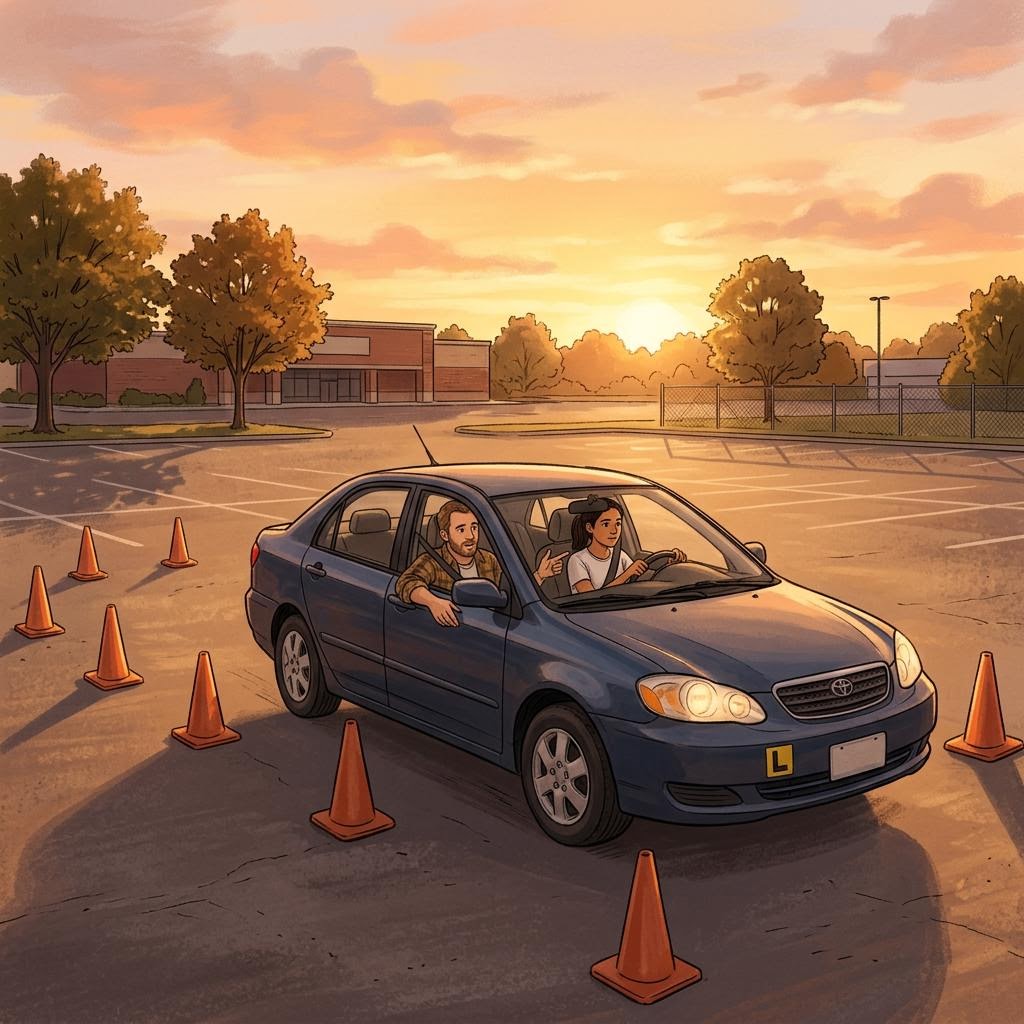
First sessions belong in a big empty parking lot: smooth starts and stops, steering control, backing up, parking between lines. Boring is the point. Do not leave the lot until stops are consistently smooth—brake control is the foundation of everything else.
A sensible progression
- Quiet residential streets: stop signs, turns, lane position, scanning
- Busier local roads: traffic lights, unprotected left turns, pedestrians
- Multi-lane roads: lane changes, mirror-signal-shoulder checks, following distance
- Highways: merging at speed, exits, maintaining space
- Conditions: night driving, rain, and unfamiliar routes—only after the basics are solid
Move to the next stage when the current one looks easy, not merely survivable.
How to coach from the passenger seat
Give directions early ("at the light ahead, we'll turn right"), narrate hazards neutrally, and save detailed feedback for after the drive. One skill per session. If either of you gets tense, end the session—short, calm, frequent drives beat long stressful ones.
Log everything
Record date, duration, roads, weather, and skills practiced, and have the supervising adult sign it. States that require certified hours will ask for it, and it is invaluable if you ever move states mid-permit.
Keep the knowledge fresh
Rules fade between the permit test and the road test. A few practice questions a week keeps right-of-way and signs sharp—and our permit-test study guide for parents covers the earlier phase if you are just getting started.