
Graduated Driver Licensing (GDL) Explained: Permit, Intermediate, Full License
Every state uses some form of graduated driver licensing. Here is how the three stages work and what restrictions to expect at each one.
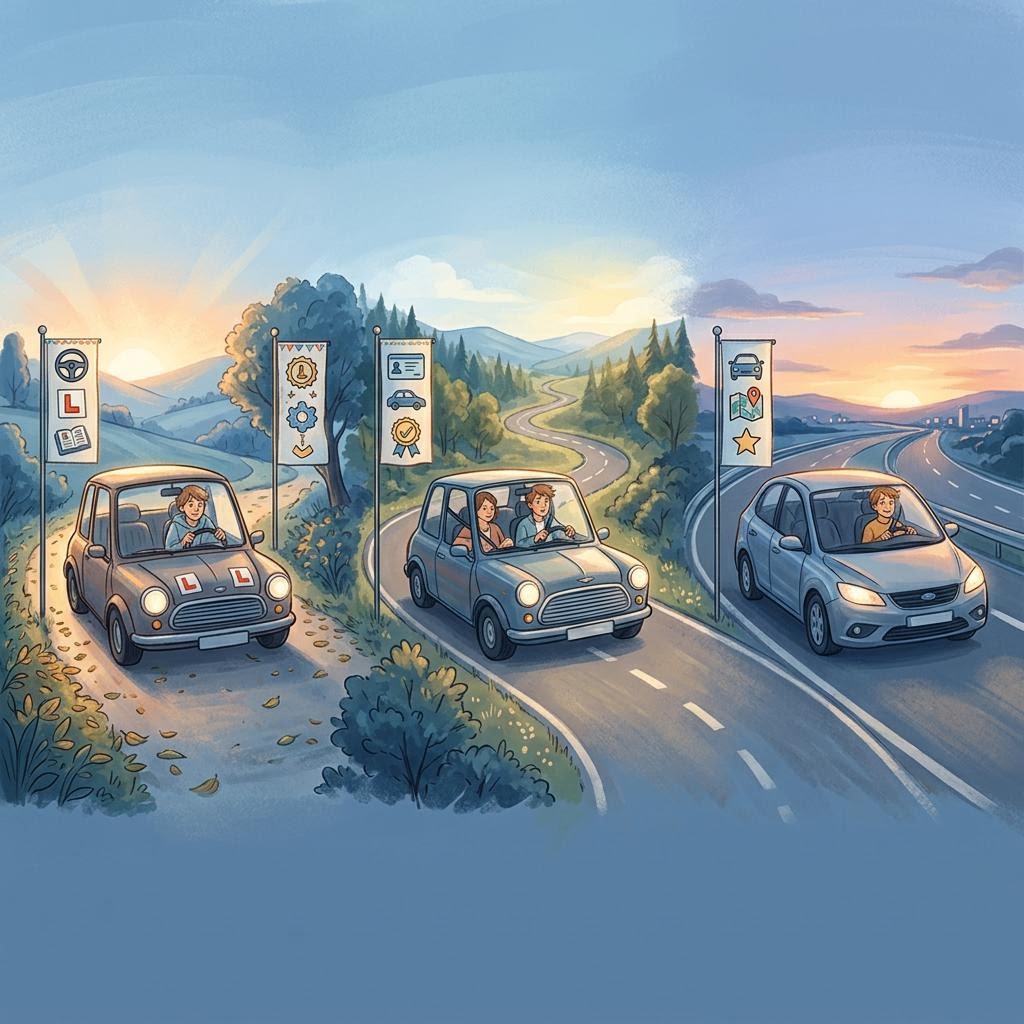
Every U.S. state uses some form of graduated driver licensing (GDL) for new teen drivers. Instead of handing over a full license on day one, states phase in driving privileges across three stages. The exact ages, hour requirements, and restrictions vary by state, but the structure is remarkably consistent.
Stage 1: The learner's permit
You pass a written knowledge test, and you can drive only with a licensed adult supervising. Most states require you to hold the permit for a minimum period (often six months to a year for minors) and to log a set number of supervised practice hours, including some at night. The written test is the gate into this stage—practice tests are the fastest way to get exam-ready.
Stage 2: The intermediate (provisional) license
After the holding period and a road test, teens typically get a provisional license. You can drive alone, but with restrictions that commonly include:
- A nighttime driving curfew (the hours vary widely by state)
- Limits on how many young passengers you can carry
- Zero-tolerance rules for phone use and alcohol
Stage 3: The full license
Restrictions lift once you reach the age your state sets—often 17 or 18—provided your record stays clean. Violations during the intermediate stage can delay this step.
Why states do this
GDL programs exist because crash risk is highest in a driver's first months behind the wheel. Phasing in privileges gives new drivers time to build experience in lower-risk conditions.
Find your state's exact rules
The details—minimum ages, required practice hours, curfew times—are state law and change occasionally, so always confirm with your state's driver handbook. Our state guides summarize permit requirements for each state: start with California, Texas, Florida, or New York, or browse the handbook hub for your state.