
School Zones and Work Zones: Signs, Speed Limits, and Fines
The two zones where speed rules change most—and where fines are often doubled. Know the signs before your test and before you drive.
Two kinds of zones show up constantly on permit tests because they change the normal rules of the road: school zones and work zones. Both use distinctive colors, both lower the speed limit, and in many states both carry increased fines.
School zone signs
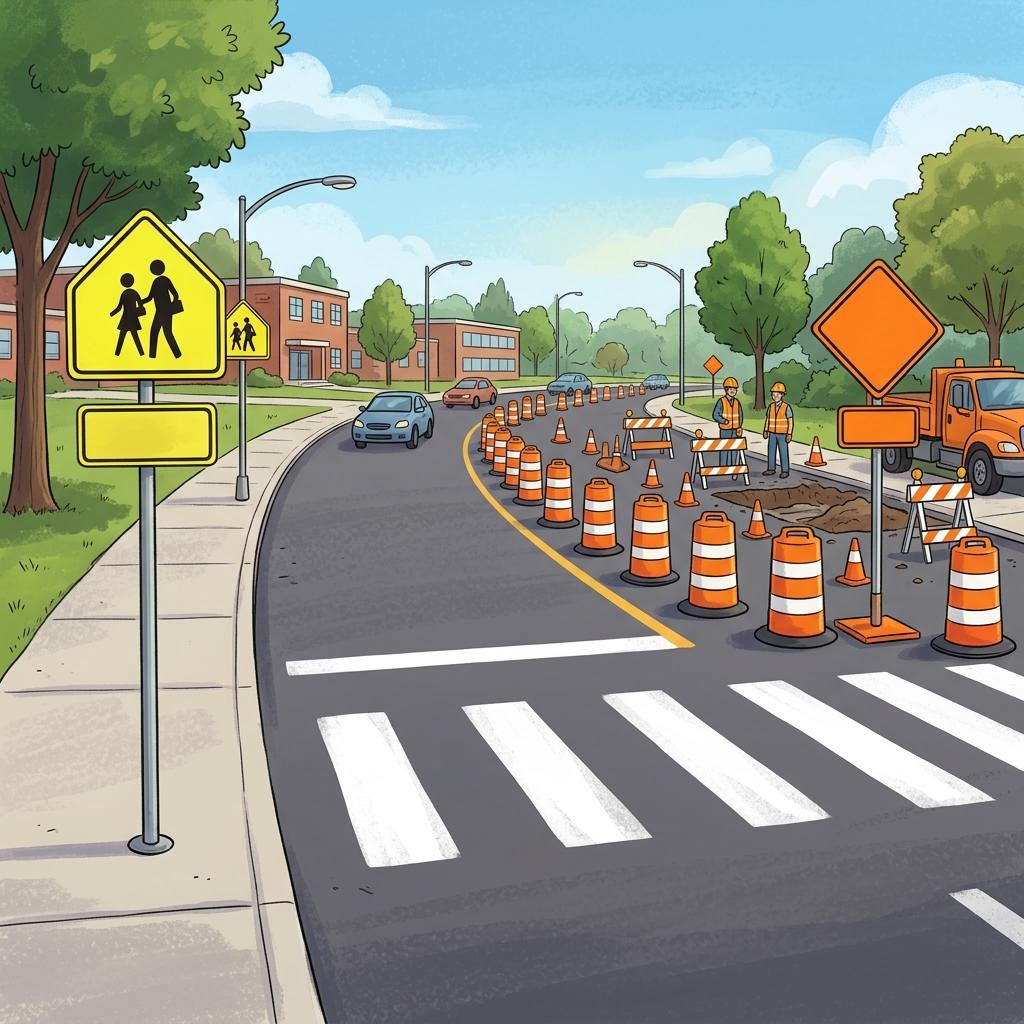
School warning signs are pentagon-shaped and use a fluorescent yellow-green color reserved for school, pedestrian, and bicycle warnings. School zone speed limits typically apply during posted hours or when beacons flash—read the plate under the sign, because the conditions are part of the law. Watch for crossing guards, and remember children can enter the road unpredictably.
Work zone signs
Construction signs are orange diamonds and rectangles. They warn of lane closures, flaggers, uneven pavement, and workers near traffic. A flagger's signal overrides posted signs and signals—if a flagger directs you to stop, you stop. Many states increase fines for speeding in work zones, especially when workers are present.
What the test asks
- What color and shape mark school zones and crossings?
- When does a school zone speed limit apply?
- Who has authority in a work zone (flagger vs. signs)?
- How should you handle merges when a lane closes ahead?
Study state-specific details
Exact school-zone limits and fine schedules are set by each state. Find them in your state's driver handbook via the handbook hub, then test yourself with your state's signs quiz, like the Georgia signs test or Arizona signs test.