
Regulatory vs. Warning Signs: The Difference the Permit Test Loves to Ask
White signs are laws; yellow signs are advice about hazards. Understanding the distinction unlocks a whole family of test questions.
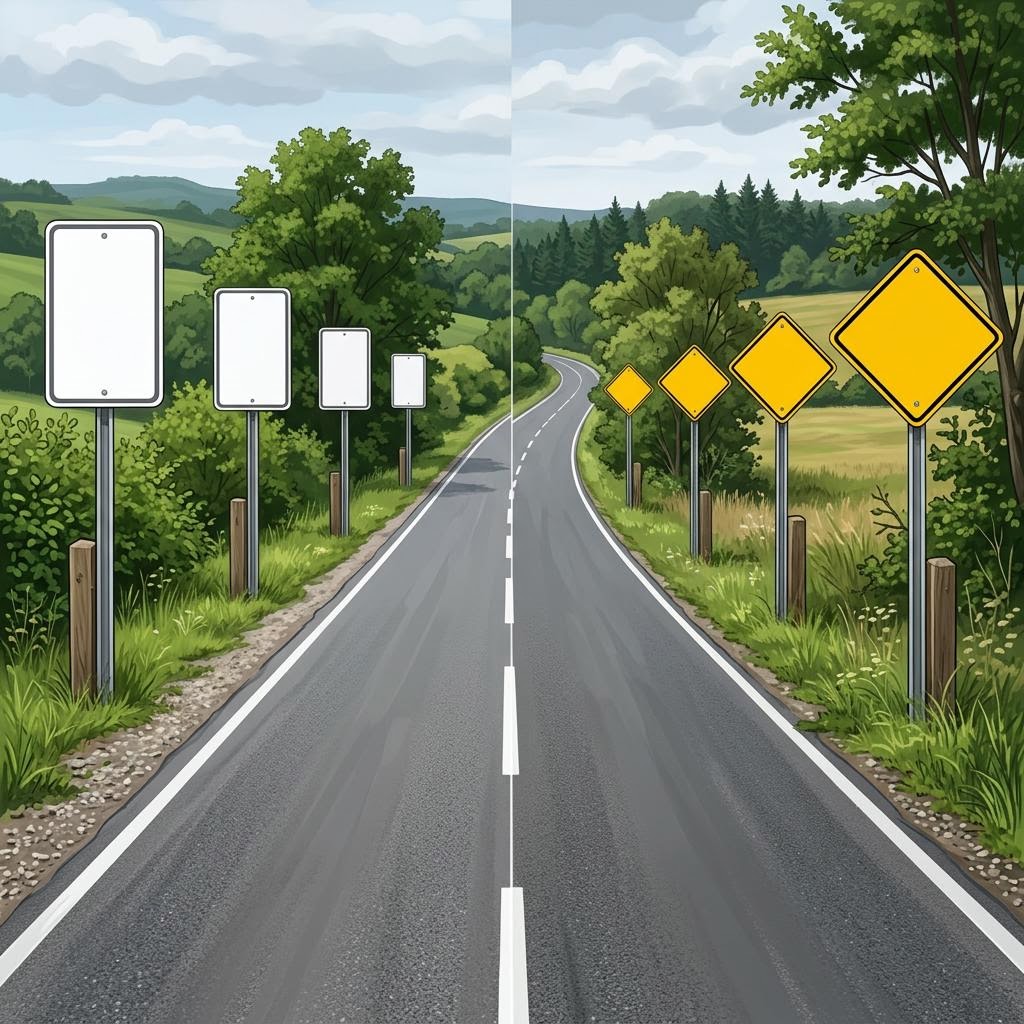
Permit tests in every state probe one distinction over and over: the difference between signs that state the law and signs that warn about conditions. Get this concept down and an entire category of questions becomes easy.
Regulatory signs: these are laws
Regulatory signs are usually white rectangles with black or red text. They tell you what you must or must not do: speed limits, DO NOT ENTER, ONE WAY, NO TURN ON RED, lane-use rules. Disobeying one is a traffic violation. STOP and YIELD are regulatory too—their unique shapes just make them recognizable at a glance.
Warning signs: these are alerts
Warning signs are usually yellow diamonds. They alert you to what is ahead: curves, intersections, merges, pedestrian crossings, slippery pavement. They advise you to adjust—slow down, widen your following distance—but they do not carry a specific legal command in themselves.
The classic trick question
A white SPEED LIMIT 55 sign is the law. A yellow diamond curve sign with a 35 advisory plate is a recommendation for safely navigating the curve. Exams love to test whether you know the advisory speed is not a posted legal limit—though driving too fast for conditions is always citable.
Practice the distinction
Start with our shapes and colors guide, then drill mixed questions on your state's signs test—for example the New York signs test or Illinois signs test. When you can classify a sign as regulatory or warning in under a second, you are ready for that section of the exam.